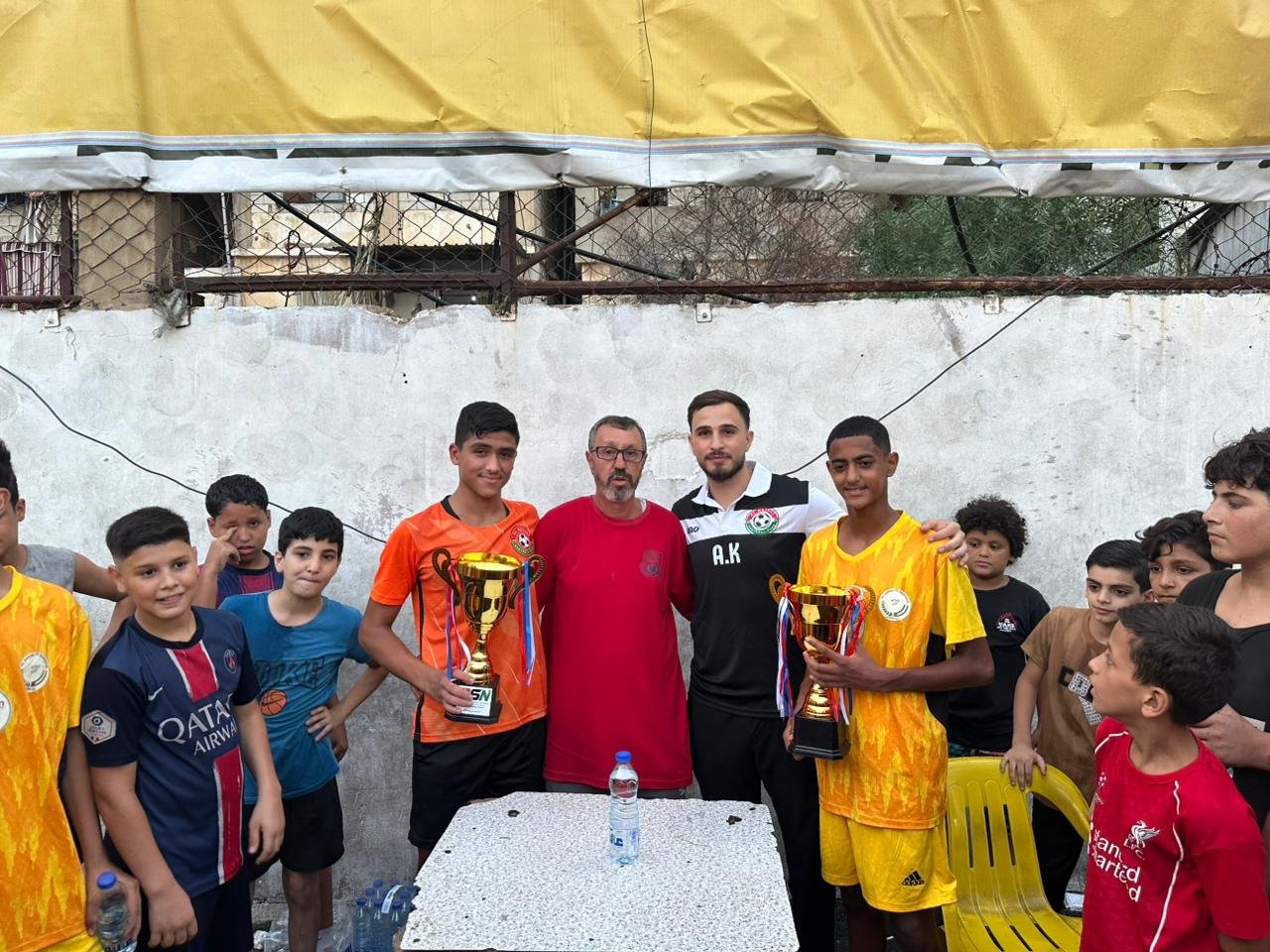
Al-Majdal Club wins Ali Fouda cup in match with Yabous Club in Nahr el-Bared Camp
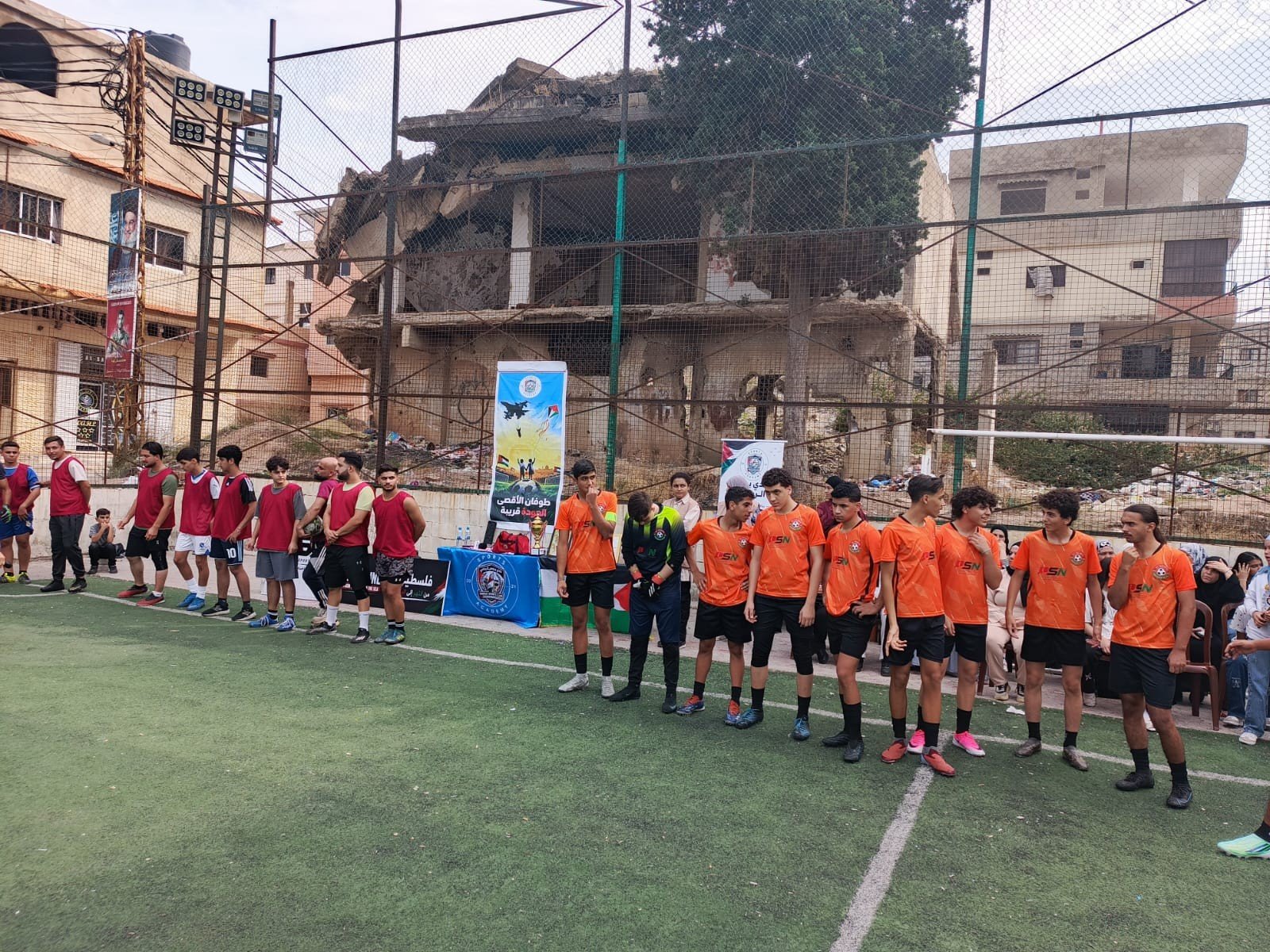
On Sunday, October 11, Yabous Sports Club in Nahr al-Bared refugee camp in northern Lebanon organized a friendly football match against Al-Majdal Club from Bourj al-Barajneh refugee camp, commemorating the martyr poet Ali Fouda and honoring his role in serving the Palestinian cause through poetry and media work.
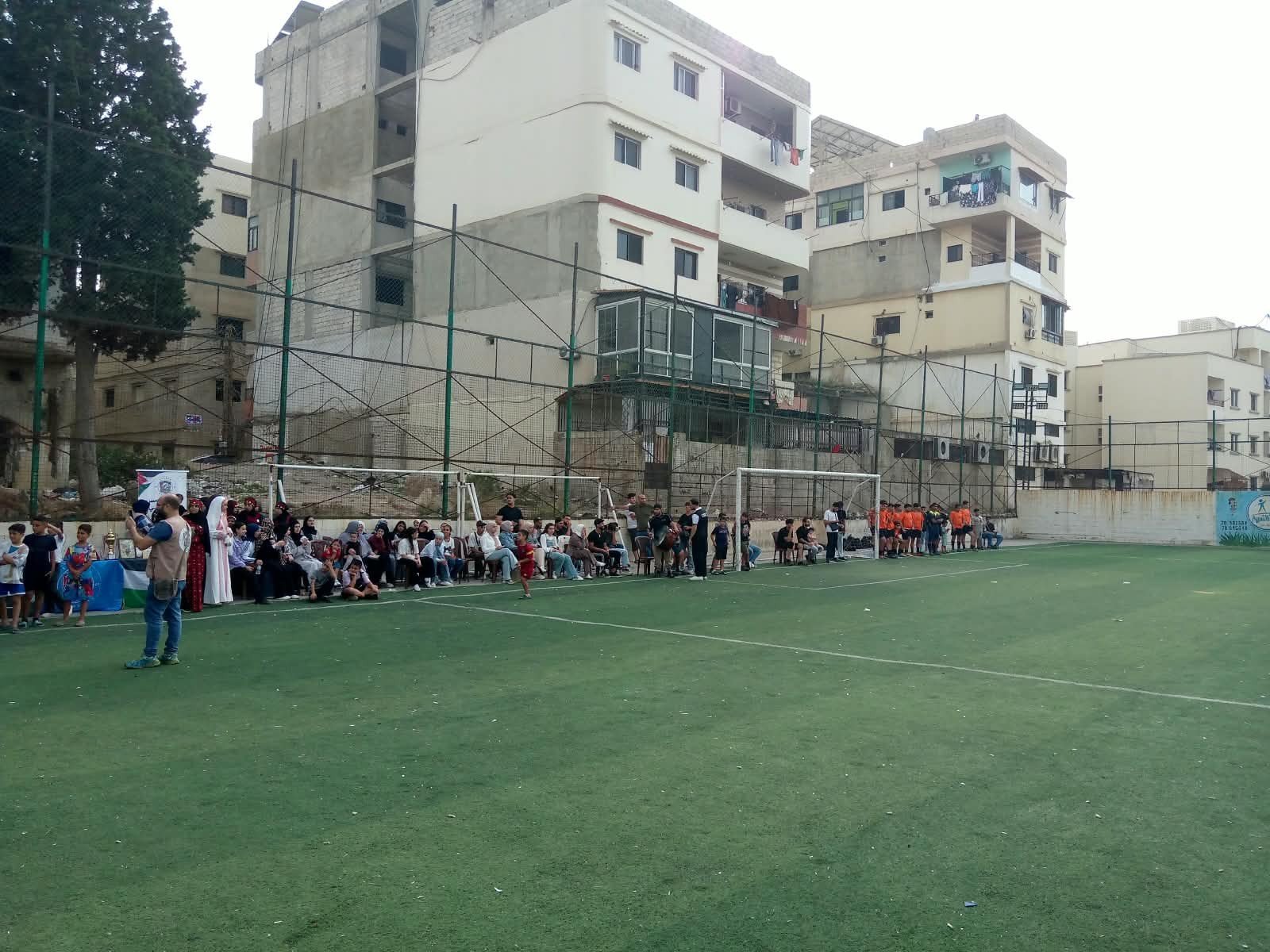
The match took place on the main football field in Nahr al-Bared camp, attended by families of martyrs, sports and community figures, as well as camp residents and sports enthusiasts.
The event began with a welcome for the Al-Majdal Club delegation, followed by a minute of remembrance in honor of the martyr Ali Fouda. Ahlam Ali then delivered a speech on behalf of Yabous Club, emphasizing the role of sports in strengthening communication between Palestinian clubs and consolidating relations among residents of the refugee camps.
Adnan Hamad, the head of Yabous Sports Club in Nahr al-Bared camp, told the Palestinian Refugees Portal that the initiative aims to bring together Palestinian youth from different refugee camps around their national cause and introduce new generations to national and resistance figures who made sacrifices for Palestine.
Hamad explained that the decision to hold the match in commemoration of poet Ali Fouda was intended to honor his life and his role in expressing the Palestinian cause through poetry and media. He noted that the initiative seeks to revive Fouda’s legacy and strengthen national identity among young people.
He added that the participation of martyrs’ families was a source of pride for the club, noting that Yabous hopes to expand the initiative to include various Palestinian refugee camps in Lebanon, strengthening connections among young men and women and consolidating relations between clubs.
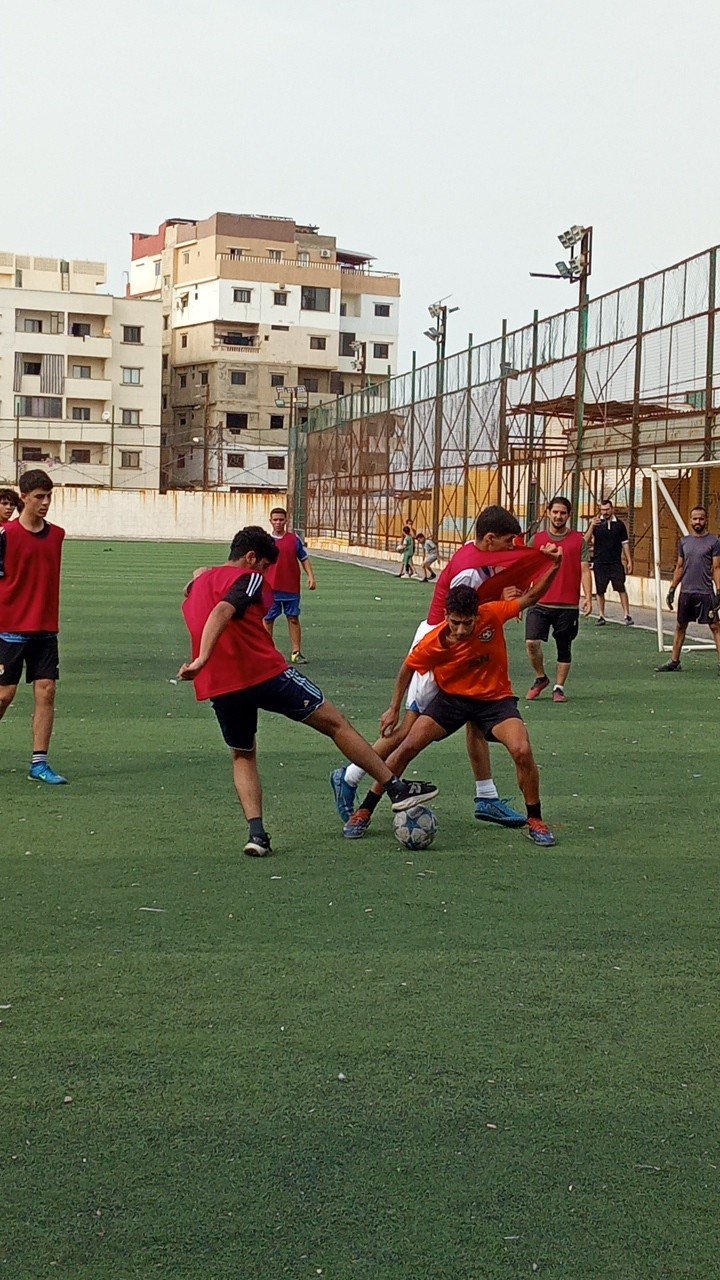
On the sporting side, the match saw competition between the two teams, with regular time ending in a 1–1 draw. The score remained unchanged during an additional five-minute period, before Al-Majdal Club secured victory through a penalty shootout.
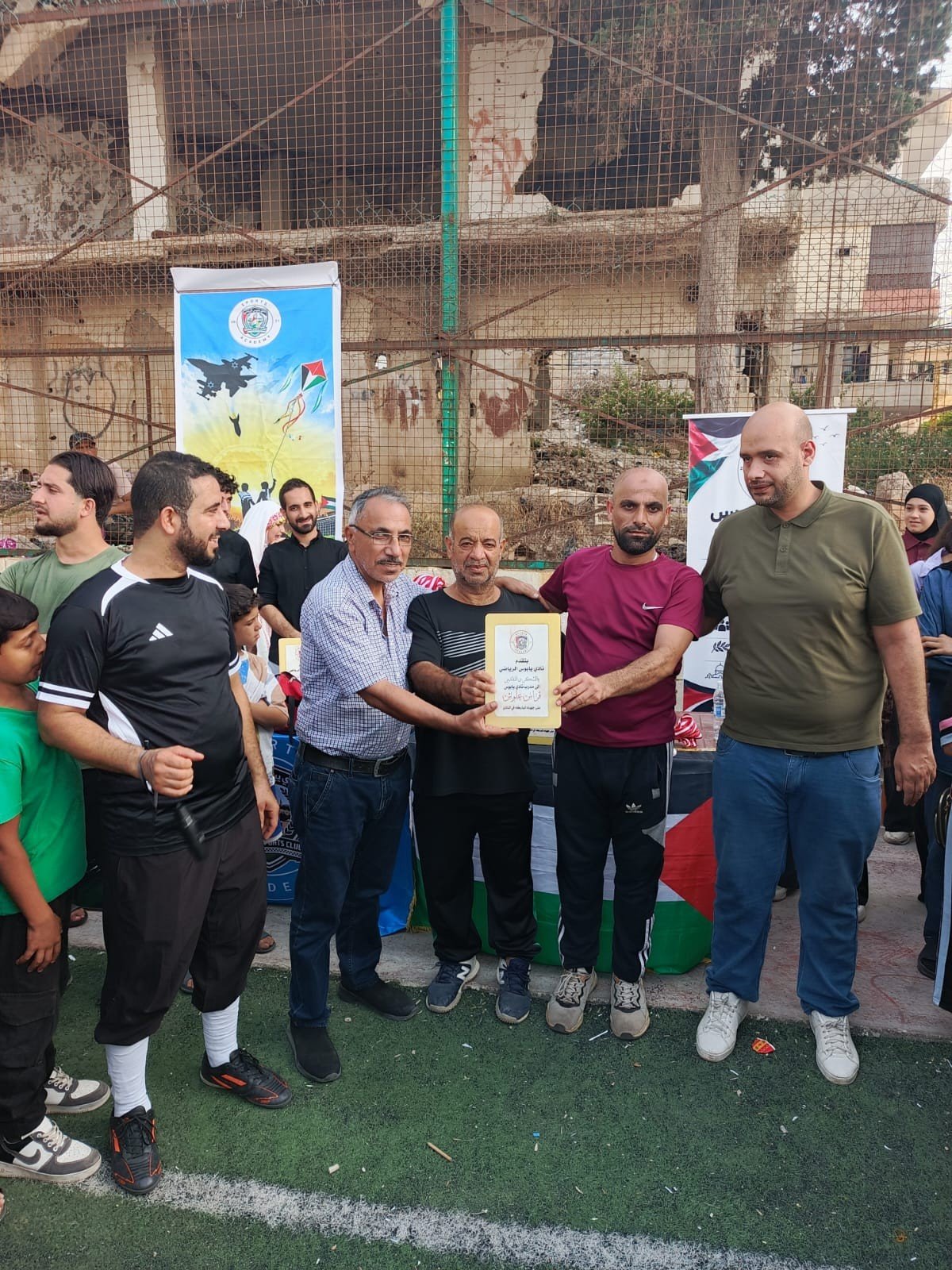
On the sidelines of the match, Yabous Club honored several individuals in recognition of their contributions to sports and community life. They included Hisham al-Issawi, director of the Palestine International Center; Sabri Ali, the dean of athletes in Nahr al-Bared camp; Captain Ali Qayyim, coach of Al-Majdal Club; Captain Firas Alloush, coach of Yabous Club; and his assistant, Captain Abdul Karim Mawed.
The club also distributed commemorative plaques and awards, and documentary photographs were taken in the presence of the martyrs’ families. The event concluded with a gathering at the Yabous Club headquarters, which included a luncheon held in honor of the Al-Majdal Club delegation.
The Martyr Poet Ali Fouda
Palestinian poet and novelist Ali Youssef Fouda was born on April 1, 1946, in the village of Qannir in the Haifa district. Following the Nakba of 1948, he became a refugee with his family in the city of Tulkarem, where he completed his secondary education.
Fouda later moved to the Jordanian capital, Amman, where he continued his education at the Teachers’ Institute, graduating in 1966. He subsequently worked as a teacher in the city’s schools until 1976. He then left for Baghdad for a brief period before moving to Beirut, where he joined the ranks of the Palestinian resistance alongside a number of intellectuals and creative figures who linked their cultural projects to the resistance and its institutions.
Together with a group of friends, Fouda founded the magazine Raseef 1981 (Sidewalk 1981), intended as a platform for marginalized and alternative culture outside institutional frameworks. Several issues were published before disagreements arose between Fouda and his fellow founders, after which he continued publishing it independently, on his own, in the form of a newspaper.
During the siege of Beirut in 1982, Fouda was wounded by shrapnel and taken to hospital. His death was mistakenly announced, prompting his friends to hurriedly write elegies and farewells. However, he temporarily regained consciousness and read what had been written about him before passing away two days later, on August 20, 1982.
Ali Fouda left behind five poetry collections:
-
Palestinian as Sharp as a Sword (Filastini ka-Hadd al-Sayf), 1969.
-
Poems from a Woman’s Eyes (Qasa’id min Uyun Imra’a), 1973.
-
The Wolf’s Howl (Uwa’ al-Dhi’b), 1977.
-
The Gypsy (Al-Ghajari), 1981.
-
Secret Publications of the Grass (Manshurat Sirriya lil-Ushb), 1982.
He also published the novel The Good Palestinian (Al-Filastini al-Tayyib) in 1979, while his second novel, The Gallows’ Poles (A’wad al-Mashaniq), was published posthumously in 1983.