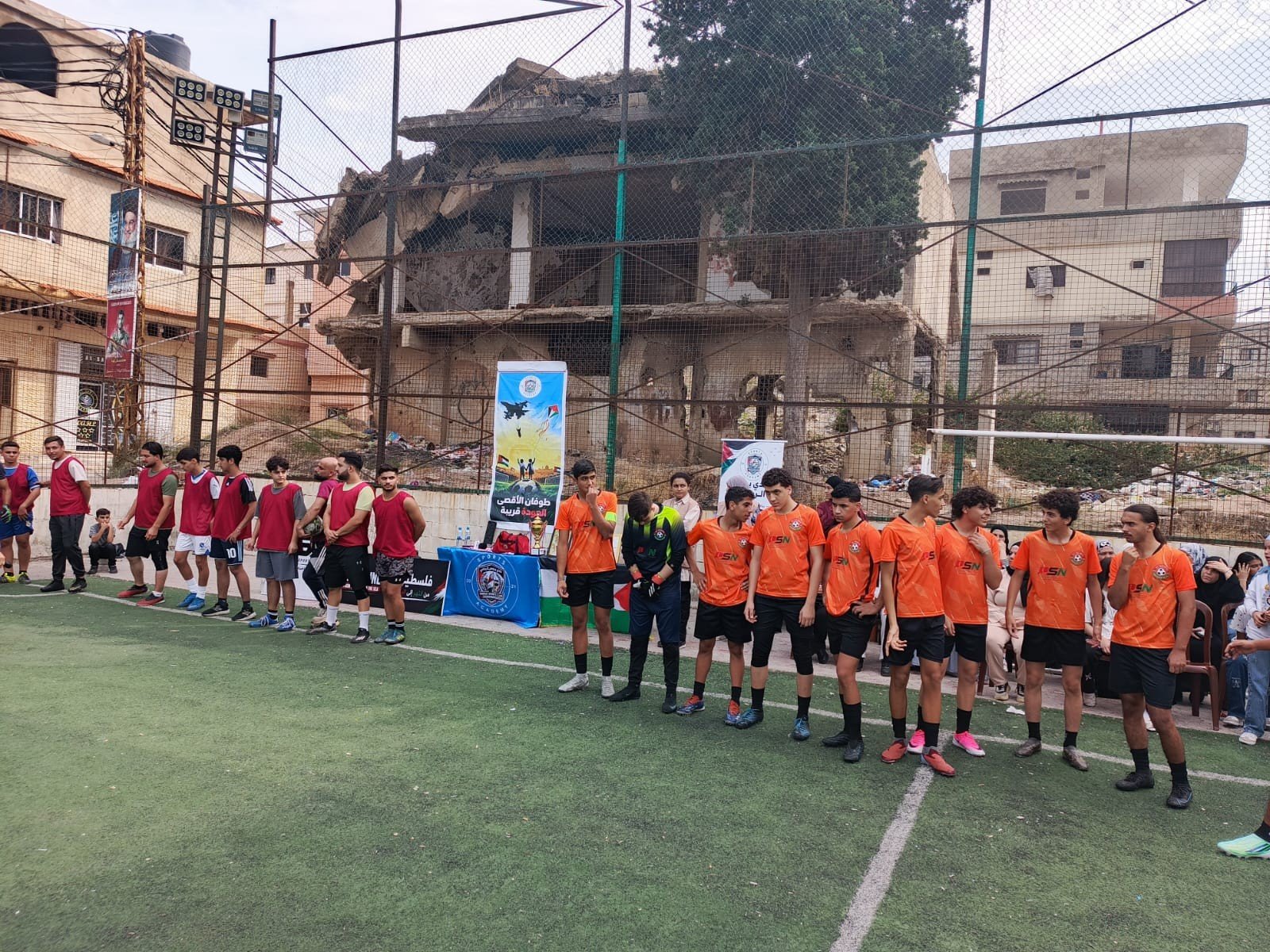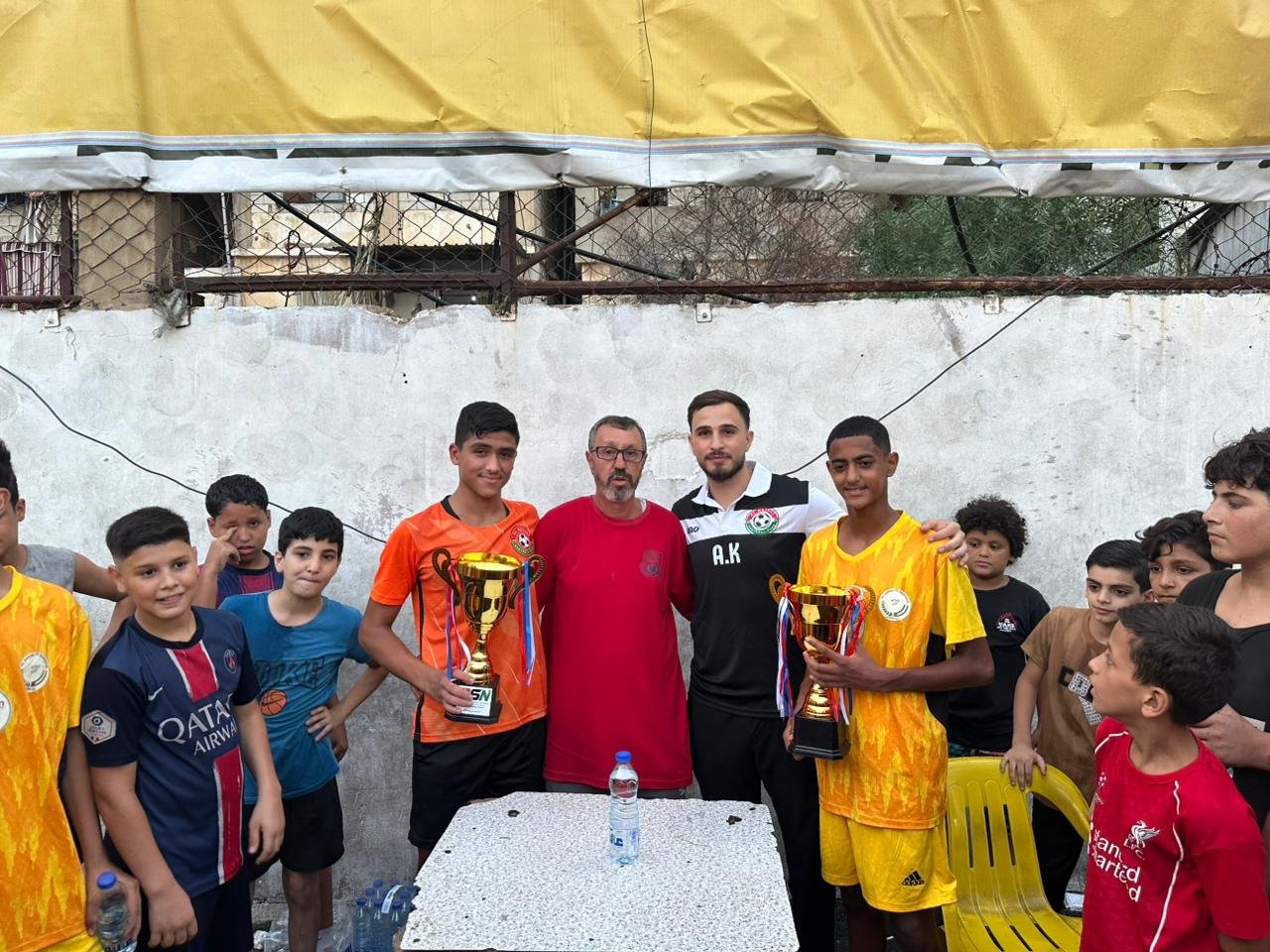
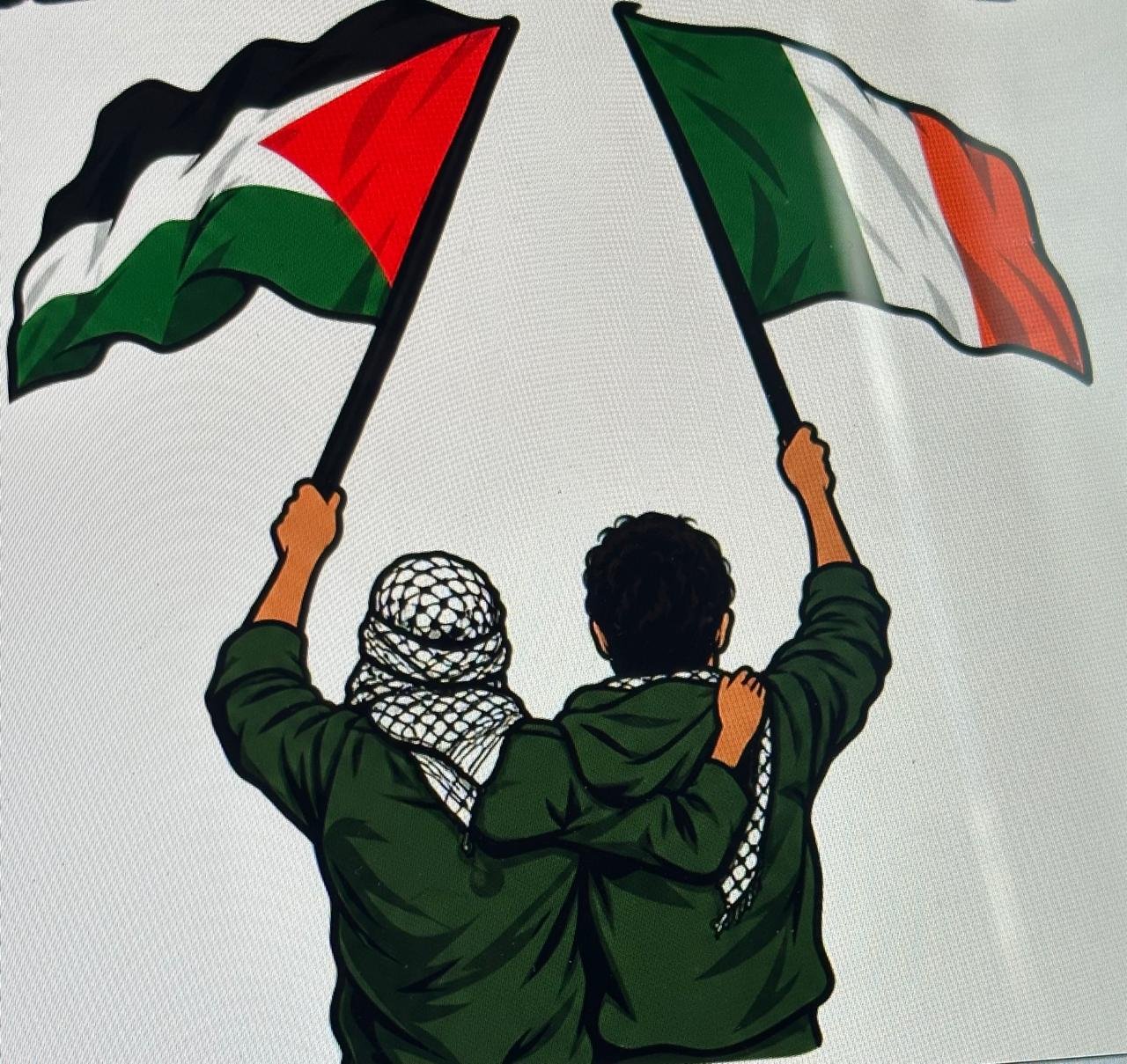
The History of Palestinian Sport: From Jerusalem to Gaza — A Century of Steadfastness and Struggle
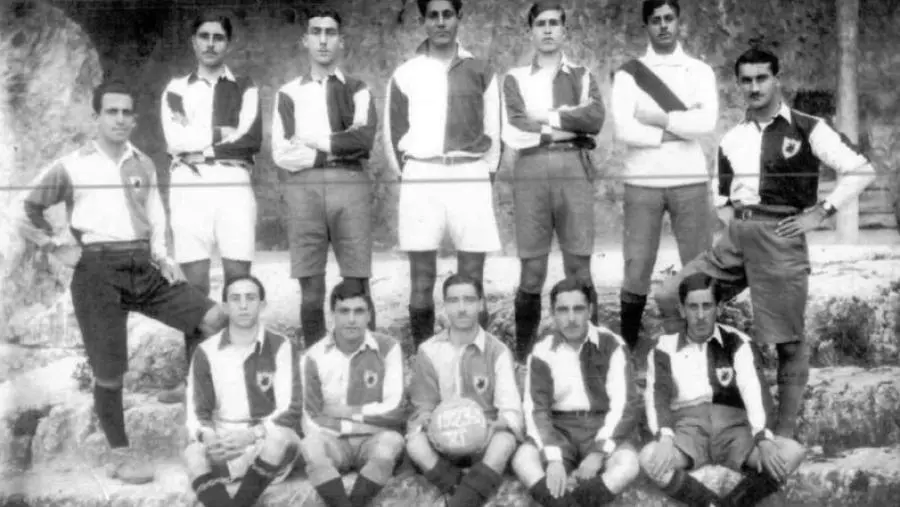
The following article, by Ahmad al-Arouri, originally published at Al-Araby, encompasses the history of Palestinian sport that the Palestinian Sports Network is based upon, reviving, and drawing inspiration from.
Ahmad al-Arouri
17 November 2025
Palestinian sport has been closely linked to the broader context of the Palestinian people’s struggle to gain recognition and affirm their identity.
Sport occupies a place in the history of Palestine not merely as a physical or recreational activity of interest to segments of society, but as a space of struggle for liberation from occupation. It extends beyond the armed form of confrontation, contributing to youth participation in social, political, and national activities and helping to consolidate Palestinian identity.
Throughout this history, Palestinian sport has remained a target of Israeli aggression. This targeting reached its peak during the genocidal war on Gaza, in which dozens of stars and athletes from various sports were martyred.
The Early Beginnings of the Sports Movement in Palestine
The modern Palestinian sports movement began with missionary institutions that introduced forms of sport previously unknown among the local population. The first football club was established in 1908 at the Bishop’s School in Jerusalem. The first football match in the Arab region was organized in Jerusalem in 1912 between the American University of Beirut team (then known as the Syrian Evangelical College) and teams from CMS, the YMCA, Saint George, and the Jerusalem Select Team.
In 1910, a football team was established that played matches against European sides. Its players included Dawud Adas, Fa’iq Shubaita, George Khoury, Hilmi al-Husayni, Qustandi Labat, George Halabi, Abdullah al-Jamal, Hassan Uwayda, Tawfiq al-Husayni, Salim Hanna, and Fuad al-Nashashibi.
Interest in sport continued to grow during these years, leading to the establishment of numerous clubs in different disciplines. This interest extended to schools and educational institutions, such as the Dusturiyya School in Jerusalem, founded by the intellectual and educator Khalil al-Sakakini in 1909, which emphasized music and sporting activities as part of its educational program.
Sports journalism also emerged early on, beginning with the newspaper Filastin, founded by Issa al-Issa and his cousin Yusuf al-Issa in 1911. The newspaper covered an important historical period before the Nakba and contributed to the strengthening of Palestinian national identity in the face of the challenges confronting the country, foremost among them the Zionist challenge and British occupation.
Sport as Another Arena of Struggle During the Mandate Period
From an early stage, sport became another field of conflict between the Arabs and the organizations of the Zionist movement, which established sports clubs for multiple purposes. These included training Jewish youth in preparation for later military involvement and using international sporting events to spread Zionist propaganda. Zionist organizations benefited from strong organizational capabilities, extensive support, and substantial resources, while Arab sports organizations operated with limited means and relied largely on donations from national figures.
Some Arab clubs adopted a policy of maintaining relations with the British in order to benefit from their expertise and improve the professionalism of their players. Like some Palestinian elites of the period, they chose not to engage in direct confrontation with the Mandate authorities.
After the Zionist movement failed in its attempt to have the football association it had established in 1924 admitted to the International Amateur Sports Federation because it did not equally represent Arabs, Jews, and British residents, it was forced to enter under a framework that ostensibly represented all communities in Palestine. However, Arabs were later marginalized, and with the assistance of the British authorities, Zionist organizations sought to dominate international sporting activities.
Palestinian Sports Clubs and Their Role in National Life
Contrary to claims published in later years about the participation of a “Palestine” national team in international matches during this period, Jewish players dominated the team while Arabs were excluded. This prompted Palestinian athletes to establish the Arab Palestinian Sports Federation in April 1931. The federation played an important role in both sporting and political life, including calls to boycott Jewish athletes. Its activities suffered after the outbreak of the 1936 Revolt, forcing some Palestinian clubs to participate in events with Jewish clubs under British sponsorship, although the overall trend remained one of boycott.
Sport in Palestine became a language of resistance, complementing what politics could not achieve and reasserting the presence of the Palestinian people at home and in exile.
Palestinian Sports Clubs and Their Role in National Life (continued)
The absence of a unified federation did not prevent initiatives aimed at sustaining sporting activity. In 1937, an Arab federation composed of clubs in Haifa was established with the aim of organizing matches among them. The boxer Adib al-Dasuqi also founded the “Olympic Institute” in Jaffa. In 1940, a table tennis committee was established, bringing together representatives from approximately twelve sports clubs.
With the beginning of the 1940s, weightlifting spread throughout Palestine. In 1944, the Palestinian Sports Federation was relaunched. Among its efforts were attempts to obstruct the propaganda activities of Zionist sports federations internationally and to strengthen relations with various sports federations, especially in Arab countries. One example of its anti-normalization efforts was its protest to the Egyptian Football Association over matches played between an Alexandria representative team and Jewish teams, shortly before the Nakba devastated Palestinian society, including its sporting institutions.
Palestinian athletes also participated in the struggle against colonialism and the Zionist movement in various ways, including direct military resistance. Among the martyrs of the sports movement who participated in the battles of 1948 were Aref al-Nu’man, a player for al-Ittihad al-Qarawi Club in Jerusalem, and Muhammad Ahmad al-Naqa, a member of the sports committee of the Islamic Youth Club in Jaffa.
Club members undertook additional responsibilities, including assisting the wounded and transporting martyrs from demonstrations and confrontations that were violently suppressed by British occupation forces. During the Abu Kabir demonstration in Jaffa in 1933, for example, scouts and members of the Islamic Sports Club formed teams to transport the injured to clinics and hospitals. Sports clubs and scouting organizations also participated in guarding coastlines and borders in an effort to prevent the Zionist movement from smuggling Jewish immigrants into Palestine.
The Collapse of Sport After the Nakba and Attempts at Reconstruction
Following the Nakba, Palestinian institutions and social structures collapsed, including the sports movement. Every Palestinian community—whether those who remained in their homeland or those dispersed as refugees—had to rebuild itself under extremely difficult circumstances.
Palestinian sport became closely tied to the broader struggle of the Palestinian people for recognition and the affirmation of their identity. It formed part of an effort to reclaim the self and recover from the trauma of the Nakba. After the Palestinian Sports Federation was re-established under the leadership of Subhi Faraj in the Gaza Strip, it sought membership in FIFA. However, its application was rejected on the grounds that Gaza was a “region” rather than a sovereign territory.
Palestinian Sports Federations in the 1950s and 1960s
In 1953, a Palestinian delegation participated in the First Arab Games by decision of the Arab League. The participation had a clearly political character, coming only a few years after the Nakba, which had displaced Palestinians, transformed them into refugees, and destroyed their institutions, including their sporting structures. During these games, Palestinian boxer Khalil Muhammad Afifi won third place in boxing competition.
From the first years after the Nakba, Palestinian bodies sought membership in Arab and international sports federations. One achievement during this period was the acceptance of the Palestinian Basketball Federation, headed by Dr. George Rashmawi, into the international basketball federation, although it was admitted under the name “Basketball Federation – Gaza Strip.”
The Egyptian administration worked with Palestinian sports activists to revive sporting life in the Gaza Strip, which at the time had approximately 3,000 football players distributed among fifteen clubs. During the early post-Nakba years, several social centers were also established under the supervision of UNRWA, including centers in Beach Camp (al-Shati’) and Nuseirat Camp, which played important roles in youth and sporting activities.
The sports movement became deeply intertwined with political and national activity during this period. Athletes and sports activists were active participants in the political mobilization that characterized Gaza under Egyptian administration. This occurred amid repeated Israeli military attacks on the Strip, campaigns demanding the arming of society and military training for youth, the emergence of the first resistance cells formed by young people from various ideological backgrounds, infiltration operations into the territories occupied in 1948, and demonstrations opposing resettlement schemes.
Since the beginning of the twentieth century, Palestinian athletes have remained part of the struggle to defend Palestinian existence—from the fields of Jerusalem to the ruins of Gaza.
In the West Bank, sporting activities before the 1967 occupation were directly linked to Jordanian sports federations, since the West Bank was integrated with Jordan in administrative and governmental affairs. During these years, a number of clubs were established, including al-Khalil Sports Club, the Islamic Club of Bethlehem, the Youth Club of Beit Sahour, the Arab Orthodox Sports Club of Beit Jala, al-Khader Sports Club, the Youth Social Center in Askar Camp, the Social Services Center in Nablus, and Hilal Ariha Club.
One of the most significant sporting events of the period, carrying identity and political dimensions, was a match between the Jerusalem Employees Club and the Algerian National Liberation Front team. The match was held in occupied Jerusalem to raise funds for the Algerian Revolution.
Women and young women also played an active role in Palestinian sporting life in both the West Bank and Gaza Strip. Among the leading female athletes of the period was Aida Salama, Palestine’s table tennis champion, who later carried out an operation against Israeli occupation forces in the Shuja’iyya neighborhood of eastern Gaza and spent years imprisoned in Israeli prisons.
The al-Tira Institute in Ramallah, established in 1964, graduated a number of women specializing in physical education and sports training. A Palestinian girls’ team also participated in table tennis competitions. Palestinian archives preserve photographs of Palestinian women athletes participating in various sports, including gymnastics.
Palestinian Sport in the Diaspora and the Role of the Palestine Liberation Organization
In the diaspora, the Palestine Liberation Organization (PLO) decided to establish a body to lead sporting and youth activities among Palestinian refugees wherever they were located. This body was called the Supreme Council for Youth Welfare.
The council participated in numerous youth conferences, including the first conference of the Arab Ministers of Youth and Sports in Cairo in 1969.
Palestinian sport struggled to secure a place in international competitions despite attempts by some states to obstruct its participation. One example was the Fifth African Men’s Basketball Championship held in Alexandria in March 1970, in which the Palestinian delegation participated despite objections from the delegations of Senegal, the Central African Republic, and Niger. Palestinian player Abd al-Hamid Masoud emerged as the tournament’s leading scorer.
The PLO also achieved successes in isolating Israeli sport internationally. Among these achievements was the expulsion of the Israeli federation from the Asian Weightlifting Federation during the 1970s.
At the same time, Palestinian refugees established sports clubs, athletic organizations, and scouting bodies throughout the refugee camps of Lebanon, Syria, and Jordan, as well as in other areas of the Palestinian diaspora. Among the clubs founded in Lebanon’s refugee camps were clubs carrying the names of Palestinian cities and towns, many of which competed in the first and second divisions of Lebanese football. These included:
- Tulkarm
- Acre (Akka)
- Jericho (Ariha)
- Jenin
- Izz al-Din al-Qassam
- Haifa
- al-Karama
- al-Houla
- Hittin
- Ramla
- Megiddo
- Nazareth
- Tall al-Safi
- al-Karmel
- Palestine
- Tiberias
- Saida
- Eilaboun
- al-Majdal
- Tarshiha
- Jerusalem
and many others.
The Palestinian archive documents photographs of Palestinian women athletes participating in various sports, including gymnastics.
During the tenure of Ahmad Adib al-Alami as head of the Supreme Council for Youth, the PLO established committees to support Palestinian youth in Egypt, Iraq, Kuwait, Lebanon, Syria, Qatar, and Jordan. These committees organized numerous sporting activities while confronting the difficult political and social conditions experienced by Palestinian refugees throughout the Arab world.
In 1970, the Youth Welfare Council was established in Beirut. Six years later, the Palestinian Olympic Committee was founded in exile. After several attempts, it eventually succeeded in gaining membership in the International Olympic Committee. Among the notable Palestinian athletes of this era were:
- Zarif Shabana
- Asad Qublawin
- Ibrahim al-Aidi
- Jihad al-Khudra
- Samir Oweid
- Saber Khaled
particularly in the sport of bodybuilding.
The story of Palestinian sport is not only a story of championships and victories; it is also the story of a society protecting its memory through clubs, federations, and athletes.
Parallel to sporting activities, Palestinian factions operating in exile during the revolutionary period established youth organizations dedicated to younger generations. Among their activities were camps that combined athletics, national and political education, recreation, and efforts to address the problems confronting Palestinian youth.
The Development of Sports Clubs in the West Bank and Gaza After 1967
The Palestinian experience differs from that of many peoples around the world because it has been shaped by a near-permanent state of instability and by the constant need to rebuild institutions after their destruction. This was true of the sports movement in the West Bank and Gaza Strip, which had been in the process of reconstruction after the Nakba when Israel occupied both territories in 1967. The reality changed dramatically, and every Palestinian activity thereafter had to be rebuilt under conditions of Israeli colonial domination and direct military rule.
In the first years of the occupation, Palestinian institutions in the West Bank and Gaza moved to establish a variety of organizations and associations, including sports bodies. Their work was guided by two principal objectives:
- Avoiding affiliation with Israeli colonial institutions.
- Preserving the unity of Palestinian representation.
The efforts of numerous individuals helped revive Palestinian sporting activity. One result was the establishment of various federations and associations, including the Nablus Sports Committee in 1970. The committee faced repeated harassment from the occupation authorities, including the repeated revocation of its operating license.
Subsequently, Israel assigned oversight of clubs and sports organizations in the occupied territories to a dedicated military officer, similar to the officers responsible for education and other sectors. The purpose was to restrict these institutions and prevent social activities from serving national and political objectives.
Cooperation among municipalities, clubs, and sporting organizations led to the establishment of the Sports Clubs Association in 1975 across the governorates of Jerusalem, Ramallah, al-Bireh, Jericho, Bethlehem, and Hebron.
In 1980, clubs from the northern West Bank joined the association, bringing it under unified leadership headed by Majid Asad. Cooperation also expanded with clubs in Gaza, which were themselves working to establish a common federation and open channels with sports bodies in the West Bank. The Gaza association was led by Muammar Bsaiso.
The associations organized tournaments and activities that brought together young people and athletes from different regions despite ongoing repression by the occupation. Dawud Mutawalli, who lived through several phases of Palestinian sports history, recalls secretly moving club and association archives from one location to another to prevent their confiscation. He notes that there were approximately 260 clubs, many of which played important social and economic roles within Palestinian society while also confronting the Israeli-sponsored Village Leagues project established by the occupation’s Civil Administration.
Palestinian Sport During the First Intifada: Repression and Assassinations
National and organizational activity within Palestinian political movements became deeply integrated with sporting activity. Historical testimonies indicate that clubs traveled between the West Bank and Gaza Strip, and organizational cadres used these movements to conduct meetings and consultations as part of the national struggle against occupation. Interest from Palestinian revolutionary organizations abroad in the occupied territories also intensified, particularly after their departure from Lebanon following the Israeli invasion of 1982.
Palestinian factions allocated funds to support the Palestinian sports movement. Fatah maintained a secret organizational office responsible for following sports affairs. Clubs in the West Bank and Gaza played a significant role in establishing the Student Youth Movement (Harakat al-Shabiba al-Tullabiyya), which became Fatah’s most active arm in universities and schools. These efforts formed part of a crucial stage in Palestinian political organizing that helped lay the foundations for the outbreak of the First Intifada in 1987, in which social institutions played a major role.
The Palestinian sports movement resisted Israeli attempts to draw it into joint activities with Israeli clubs. Following the outbreak of the First Intifada, the occupation intensified its repression of Palestinian sport, killing a number of athletes. Among them was Jamal Ghanem, who was martyred by an undercover Israeli unit known as the Mista’arvim after it stormed a football field in Tulkarm during a match between the Shuweika Club and the Trade Unions Club. The occupation also shut down a number of sports clubs, some of them for periods lasting as long as ten years.
Occupation Crimes Against Sport After 2000
Since the outbreak of the Al-Aqsa Intifada, Israeli aggression against the Palestinian people has reached increasingly brutal levels in both its methods and strategies. The Palestinian sports movement has borne its share of killings, destruction, arrests, and various other violations.
According to a statistical study compiled by Palestinian journalists Ruhi Darabiya and Mohammad Darabiya, the Israeli occupation army killed approximately 540 Palestinian athletes between 2000 and 2014. The same study found that the total number of martyrs from the Palestinian sports movement from 1967 until the time of the study’s publication had reached approximately 700 martyrs, in addition to thousands of wounded and imprisoned athletes.
Despite the destruction of stadiums and the targeting of athletes, Palestinian sport has repeatedly risen from beneath the rubble to rebuild itself once again.
The occupation also destroyed the headquarters of numerous clubs, as well as stadiums and sports facilities, during its repeated assaults on the Palestinian people. The scale of destruction reached unprecedented levels during the wars launched against the Gaza Strip beginning in 2007.
In the West Bank, the occupation prevented the construction of sports fields in villages and towns located within areas classified as Area C. It raided club headquarters, assaulted athletes in various locations, including Jerusalem, and prevented numerous players from traveling abroad to participate in international competitions.
The Targeting of the Sports Sector in Gaza During the 2023 War
Israeli criminality reached its peak during the genocidal war launched against Gaza on 7 October 2023. During this war, approximately 949 athletes were martyred, including more than 467 football players.
The occupation army killed prominent sporting figures, including:
- Suleiman Obeid, widely known as the “Pelé of Palestine”;
- Hani al-Masdar, head coach of the Palestinian Olympic national team;
- Mohammad Khattab, an international referee;
and many others who were martyred together with their families under bombardment or shot by Israeli snipers while searching for food amid the starvation campaign imposed on the Gaza Strip.
Conclusion
Over the course of more than a century, the Palestinian sports movement has demonstrated that it is an integral part of Palestinian identity and of the Palestinian people’s long struggle.
Clubs, stadiums, and federations have served not only as sporting spaces but also as arenas for mobilization, organization, and resistance. For that very reason, they became direct targets of an occupation that sought to dismantle them and silence their role.
Yet despite continuous destruction and targeting, Palestinian sport has remained capable of renewing itself and carrying a political and national message that affirms Palestine’s presence in Arab and international arenas. The legacy of Palestinian sport remains a living testament to the Palestinian people’s ability to transform sport into an act of existence and steadfastness, and into a means of protecting their memory and identity against attempts at erasure and annihilation.